An Excellent Photograph of Absolutely Nothing
I photographed a snow leopard.
This statement is true, but requires some generosity.
Somewhere among the millions of pixels of Altai mountainside are a few pixels that are, indisputably, a snow leopard.
Here’s what happened…
After a series of international flights, domestic flights, long drives, and temperatures cold enough to make going outside seem less like an activity than a lapse in judgment, I found myself in a ger camp with a really wonderful group of people, discussing the best way to toast bread on a stove heated by dried camel dung.
I went to Mongolia with wildlife photographer David Gibbon and a small group of similarly afflicted people for one purpose: to find and photograph a snow leopard.
To do that, we had to find one.
There’s something inherently absurd about traveling halfway around the planet to spend days staring at rocks. But that’s what we did. We spent hours scanning ridges, we hiked up and slid down scree slopes, and we stared at rocks, all in hopes of seeing an animal whose evolutionary résumé includes being one of the most elusive species on the planet.
Just when we thought we couldn’t stand the cold a moment longer, someone said the words everyone had been waiting for. “Snow leopard.” The trackers had found one. Surprisingly, what followed wasn’t immediate jubilation. It was confusion. Where was it? All I saw were rocks.
Thus began a form of navigational discourse peculiar to wildlife watching and almost entirely useless outside it. “See the ridge?” “The dark patch below it.” “Go left from there.” “There's a big rock.” “It’s on that rock.”
When my brain was finally able to resolve the animal from the mountain, my heart stopped. There it was, in its perfectly adapted glory. Not emerging dramatically from the landscape but belonging to it so completely that the distinction between animal and mountain seemed almost a technicality.
Speaking of technicalities. On this trip I was trying out Sony’s 400–800mm lens, a formidable piece of optical engineering designed to make distant things considerably less distant. At 800mm, wildlife that would otherwise appear small can fill an impressive portion of the frame. Usually.
This time, eight hundred millimeters of expensive optimism produced approximately twelve pixels of snow leopard. But I was thrilled about it!
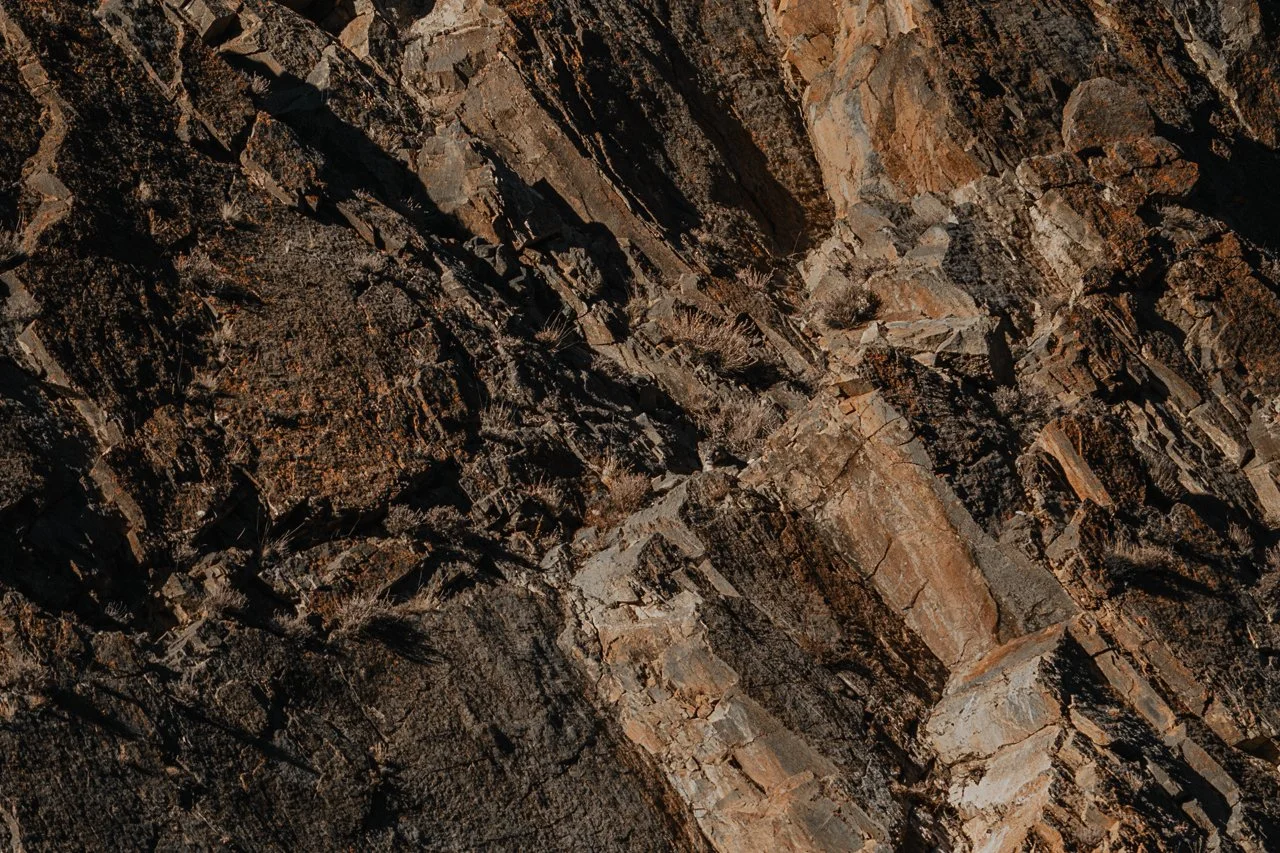
I briefly mused about entering the photograph in a competition. I would title it: Snow Leopard, Mongolia. You’ll have to trust me. It would not have won.
By conventional standards, it’s a crappy image. It’s basically a Where’s Waldo exercise, not a portrait worthy of a magazine spread or a large print on someone’s wall. But it does one thing exceptionally well. It reminds us that being very far away is an entirely reasonable place for a snow leopard to be.
Photography has a habit of distorting proportions. A long lens compresses the world between us and an animal. Camera traps put us in places we could never safely or ethically occupy. Cropping removes inconvenient acreage, resulting in an image that shows every whisker, feather, and catchlight in an eye.
Don’t get me wrong. I love a tight portrait. There’s something irresistible about filling the frame with an animal and seeing details our unaided eyes would never have been permitted to linger over. But sometimes it’s worth stepping back.
A snow leopard seen from very far away is a snow leopard seen as humans were meant to see one. Small. Remote. And incredibly difficult to find.
And perhaps that’s why I’m so fond of my terrible photograph. My image reminds me of what the photograph can’t show. The extreme cold. The waiting. The camaraderie. The false alarms. The moment when a collection of rocks rearranged itself inside my brain and became a snow leopard. And the peculiar, enormous pleasure of realizing that one of the world's most elusive animals was actually there.
Wildlife photographers inevitably return from trips and assess the haul. Do I have anything worth keeping? Photography is an art, a craft, and sometimes an occupation with measurable success. Images matter.
One of the hazards of carrying increasingly capable cameras into wild places is that we begin to use the resulting images as evidence that an experience was worthwhile.
I went to Mongolia hoping to make a beautiful photograph of a snow leopard. I didn't. I saw one.
Those aren’t the same achievements, but I’m glad they aren't.
Some experiences resist possession. They remain stubbornly themselves, indifferent to whether we’ve managed to convert them into something we can print, post, exhibit, or prove.
I have a photograph containing approximately twelve pixels of snow leopard. It’s not a failure.
It's evidence of snow leopard success.